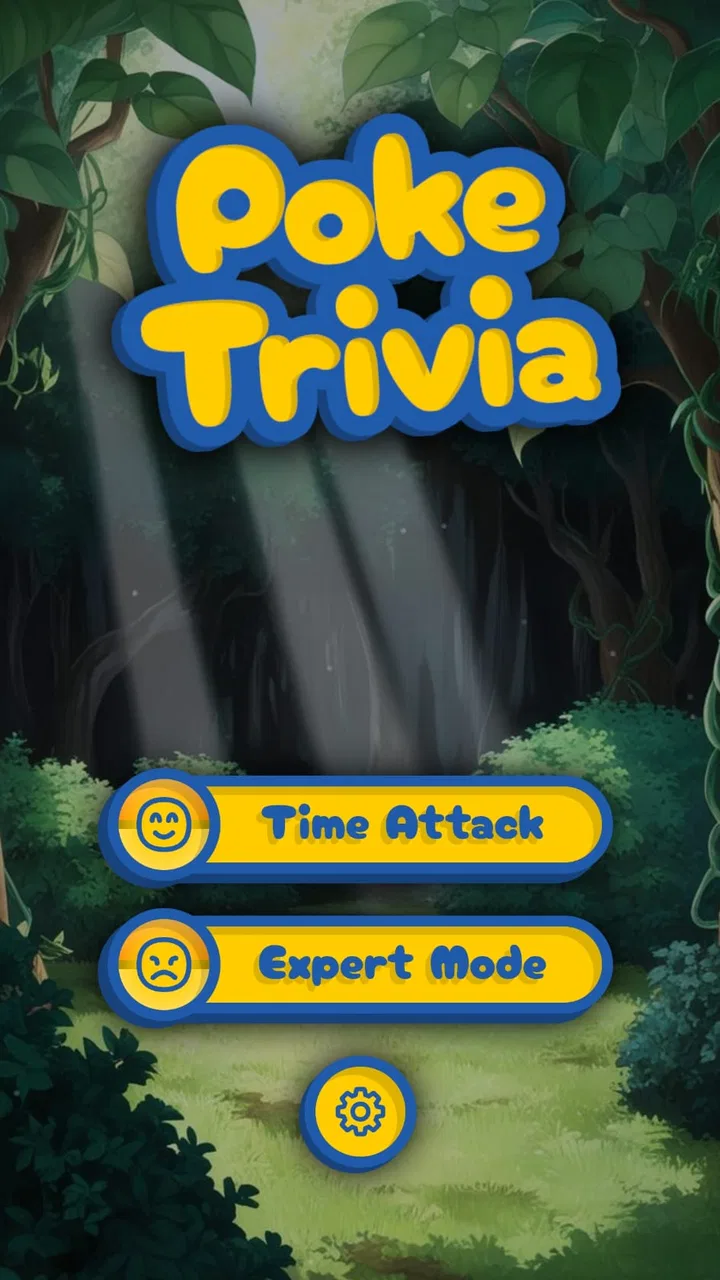
Poke Trivia
- 3.9
- Rating
- 10.00K
- Installs
- Free
- Price

 Analysis by App-foxy
I approached Poke Trivia as a quick knowledge game rather than a full adventure or battle experience, and that distinction matters. It is a free trivia title from Studio Kah, built around testing how well you know the world of Pokémon. The idea is simple: open it when you have a spare moment, answer questions, and see whether your memory is stronger than your confidence.
That focused design makes it easy to understand immediately. You do not need to learn a complicated interface or prepare a team before playing. At the same time, a compact quiz can feel repetitive if its question pool, feedback, or progression does not keep me interested. My overall impression is that this is best viewed as a lightweight challenge for fans who enjoy recalling names, details, and familiar Pokémon knowledge, not as a replacement for a mainline role-playing game or a feature-rich competitive quiz platform.
How the current version feels to play
The current release is version 1.0.2, and the game remains a straightforward trivia experience. That simplicity is its most useful quality for casual sessions. I can imagine opening it while waiting for an appointment, taking a few questions during a commute, or passing a phone around with a friend to compare who remembers more. It asks for much less commitment than a longer game, which makes it approachable for younger players and for fans who only want a short mental workout.
You May Also Like

 AccuWeather: Weather Radar
AccuWeather Review: A Quick, Clear Forecast for Everyday Decisions
For everyday plans, the best forecast is the one you can understand quickly. AccuWeather makes rain timing, radar, and local conditions easy to act on, with a few trade-offs.

 Hill Climb Racing
Why Hill Climb Racing Still Turns Crashes Into One More Run
A tiny car, a bumpy hill and one more upgrade: Hill Climb Racing keeps resurfacing because its simple chaos makes every near-miss feel personal.

 AliExpress - Shopping App
AliExpress Makes Global Shopping Feel Personal, but Shoppers Bear the Risk
AliExpress turns a global marketplace into a pocket-sized discovery engine. Its reach is useful, its shopping loop compelling, and its trade-offs easy to miss.

 Lords Mobile: Kingdom Wars
Lords Mobile Is a Kingdom-Building Routine, Not a Quick Match
A case-by-case verdict on the building, battles, device demands, and social commitments that make Lords Mobile rewarding for some players and exhausting for others.

 PDF Scanner app - TapScanner
TapScanner Makes Paperwork Easier to Capture, Check, and Share
TapScanner makes scanning with a phone feel less like a rescue operation and more like a dependable step in getting work done. Its capture tools are useful, though not flawless.

 Block Blast!
 Shows How Much a Puzzle Game Can Leave Out
A quiet grid game shows why puzzle players increasingly value instant clarity, repeatable skill and low-pressure play—and where the genre still needs to catch up.
More From Our News Desk
View All News


The subject also gives the quiz a clear identity. Pokémon knowledge covers several levels, from instantly recognizable creatures to details that reward long-term familiarity. That creates a natural difference between a casual fan and someone who has spent years playing the games, watching the shows, collecting cards, or following the broader franchise. A good session can therefore feel personal: an easy question builds momentum, while a less obvious one exposes a gap in memory.
I would not choose this title when I want exploration, collecting, story, or strategic battles. Its appeal comes from recognition and recall. If you prefer games that keep changing visually or offer a large number of activities, the narrow format may feel limited. If you like testing yourself without a lengthy tutorial, the same narrow format is a genuine advantage.
The game is free, which lowers the barrier to trying it. It is also marked for Everyone, so it is positioned as a family-friendly choice rather than an experience aimed at mature players. That does not automatically mean every question will suit every age equally; younger children may still need help with reading or with unfamiliar franchise terms. For a family session, I would treat it as a conversation starter rather than simply handing over the phone and walking away.
A practical way to use it in everyday life
One useful routine is to turn a short wait into a friendly challenge. For example, two people can take turns answering without immediately discussing the answer. After each round, the person who missed a question can explain what they remembered, while the other player explains why they chose a different option. This makes the app more social and helps reveal whether a mistake came from confusing similar names, forgetting an evolution line, or simply guessing too quickly.
That approach also prevents the quiz from becoming a silent pass-or-fail exercise. Trivia is more enjoyable when the answer leads to a small discussion. A child might recognize a Pokémon from a show but not know its game-related details, while an older fan may remember a name but mix up its type or evolution. The app works well as the prompt for that exchange, even when the individual question is brief.
For solo play, I recommend treating each attempt as a memory check instead of chasing a perfect result immediately. Answering too quickly can turn familiar knowledge into careless errors. Taking a moment to separate what I truly know from what merely looks familiar gives the game more value and makes repeat sessions less frustrating.
What the release information tells me
The title arrived on January 30, 2025, and the current version, 1.0.2, suggests an early stage in its life rather than a long-established quiz platform. That does not make it a poor choice, but it changes how I judge it. At this point, I care less about expecting a huge ecosystem and more about whether the basic quiz loop is clear, responsive, and enjoyable enough to revisit.
Its audience is already visible in the store footprint: the game has passed ten thousand installs, while its displayed average rating is zero point zero. I would not treat that rating as a useful verdict on the quality of the experience. With a very small or inactive review signal, the number provides little practical guidance, so I would make the decision based on the format itself and on whether Pokémon trivia is something I genuinely enjoy.
The minimum operating-system requirement is Android seven point zero. For many current phones, that should not be an obstacle, but people using older hardware should check compatibility before planning to install it. The requirement also tells me that the game is not aimed only at the newest devices, which suits its simple, accessible concept.
Studio Kah is the developer behind the release. Because the version is still early, future updates could be important to the long-term experience. I would pay attention to whether later releases improve variety, clarify answers, refine the interface, or give returning players a stronger reason to continue. Those are expectations, not promises, and I would not assume that any particular feature is already present.
How the early version affects existing players
For someone discovering the game now, version 1.0.2 is a sensible starting point because it represents the current experience rather than an older build. Existing players, however, may judge it differently. They will want to know whether a new release changes the feel of familiar sessions, fixes annoying interruptions, or adds enough freshness to justify coming back. Without treating every version number as a major transformation, I see this release as a sign that the app is being maintained during its early development.
That matters because trivia games depend heavily on repetition. A question can be exciting the first time and uninteresting after it becomes predictable. The value of a small update is therefore not only technical polish. Even modest improvements to question variety or the way results are presented could have a noticeable effect on replayability. On the other hand, a version change alone does not prove that the content has expanded in a meaningful way.
If I were already playing, I would keep a simple mental note of the questions that appear too often and of any areas where the wording feels ambiguous. That is useful when deciding whether the game remains a good daily habit or is better saved for occasional group sessions. A quiz does not need endless content to be fun, but it does need enough uncertainty to make the next question worthwhile.
There is also a difference between being familiar with Pokémon and enjoying quizzes about Pokémon. A fan may know the subject well but dislike being judged on rapid recall. Another player may enjoy guessing and learning even without deep franchise knowledge. I would recommend the game more confidently to the second group than to someone seeking a competitive ranking system or a detailed learning curriculum.
Where it compares with familiar alternatives
Compared with a mainline Pokémon game, this is far less demanding. There is no need to spend time building a party, exploring a region, or planning battles. That makes it better for a five-minute break, but much less satisfying when I want a sense of progression through a world. The two formats complement each other rather than compete directly: one tests knowledge, while the other asks me to make decisions inside a larger adventure.
Compared with broad trivia apps, the advantage here is focus. A general quiz may cover history, science, entertainment, and sport, but it cannot give Pokémon fans the same concentrated challenge. The trade-off is obvious: if my interests change from one session to the next, a general trivia app offers more subject variety. Poke Trivia makes more sense when the franchise itself is the reason I want to play.
Compared with fan-made quizzes shared through websites or social media, a dedicated app is more convenient for repeated phone-based sessions. I do not need to search for a new quiz every time. However, a web quiz can sometimes offer longer explanations, themed rounds, or community-created material. I would choose this app for quick access and choose a broader alternative when I want deeper context around each answer.
It is also different from flashcards. Flashcards are useful when I want deliberate study and control over what I review. A trivia game is more spontaneous and better at revealing what I can recall without preparation. My practical recommendation is to use a flashcard system for targeted learning and this game for relaxed testing. Trying to force it into a study tool would make its short-form design feel more restrictive than it needs to be.
Remaining gaps that shape the decision
The biggest limitation is the natural risk of a narrow content loop. A quiz centered on one franchise needs enough variety to remain interesting after the novelty fades. I would be cautious about recommending it as a daily long-session game. It is more convincing as an occasional refresher, a family challenge, or a quick test between other activities.
Another consideration is the depth of the feedback. A correct or incorrect result can tell me how I performed, but an explanation is what helps me understand why I was wrong. If the game mainly measures recall without teaching the surrounding detail, its educational value remains modest. That is not a failure for a casual quiz, but it is an important distinction for parents, educators, or fans who want to expand their knowledge rather than simply score points.
Question wording is equally important. Pokémon names, forms, generations, and related details can be easy to confuse, so a question needs to be precise. When I am unsure whether I missed a fact or misunderstood the wording, the challenge becomes less satisfying. I would judge the game most favorably when its questions reward knowledge instead of exploiting ambiguity.
Replayability is another trade-off. A short game can be convenient precisely because it does not demand much time, yet that same compactness may leave experienced fans wanting more structure. Players who need achievements, long-term goals, extensive customization, or a visible competitive ladder should probably look elsewhere. The free price makes experimentation easy, but it does not remove the need to match expectations with the format.
Who should try it, and who should skip it
I would recommend it to Pokémon fans who enjoy being asked direct questions, families looking for a simple shared activity, and casual players who want something that can be started and stopped quickly. It is especially suitable for someone who does not want a large download commitment in terms of attention. The Everyone age rating also makes it a reasonable candidate for mixed-age play, provided younger children are comfortable reading the questions.
I would be more hesitant to recommend it to players who want an original story, strategic depth, collection systems, or a steady stream of new modes. It is also not my first choice for serious learning. If I wanted to memorize specific details, I would use organized notes or flashcards alongside a quiz rather than relying on spontaneous questions alone.
A useful test is to ask why you are installing it. If the answer is “I want to see how much Pokémon knowledge I can recall,” the game’s focused design is likely to work. If the answer is “I want a complete Pokémon game,” it will probably disappoint because trivia cannot provide the exploration and agency associated with the larger games.
What I would watch in future development
The next stage for Studio Kah should be judged by how well it protects the basic idea while giving returning players a reason to come back. I would look for clearer feedback, more varied challenges, and improvements that make mistakes feel informative rather than merely punitive. Even small refinements could help the game move from a one-time curiosity to a dependable casual pastime.
I would also watch how the question experience handles different levels of knowledge. Beginners need an inviting entry point, while longtime fans need questions that do not become predictable. Balancing those groups is difficult, but it is central to the app’s future. A good trivia game should let a newcomer enjoy early success without making experienced players feel that every round is automatic.
For current users, the sensible approach is to keep expectations grounded. Enjoy the game for short sessions, use it as a conversation prompt, and notice whether the available questions remain fresh for your own level. Do not read too much into the average rating, since the displayed zero point zero does not offer a dependable picture of player satisfaction.
After trying it, my recommendation is cautiously positive for the right audience. Poke Trivia is a focused, free Pokémon knowledge challenge, not a full franchise adventure. Its early version and compact purpose make it easiest to appreciate in short bursts, with friends, or as a relaxed memory test. I would install it if I wanted a simple trivia session built around Pokémon, but I would choose a broader quiz app, flashcards, or a mainline game when I needed variety, instruction, or deeper gameplay.
That honest distinction is what makes the title easier to recommend. It does not need to do everything. It only needs to make a few minutes of Pokémon recall enjoyable, and for fans who like that particular kind of challenge, it has a clear reason to be on the phone.
FAQs for Poke Trivia
01What is Poke Trivia and how does it work?
Poke Trivia is an engaging quiz app designed for fans of Pokémon. It challenges players with a variety of questions across different categories, testing their knowledge of Pokémon characters, moves, and lore. Users can play solo or compete with friends, and the app offers regular updates to keep the content fresh.
02Is Poke Trivia available for both Android and iOS devices?
Yes, Poke Trivia is available on both Android and iOS platforms. Users can download it from the Google Play Store for Android devices and the Apple App Store for iOS devices. Ensure your device meets the minimum operating system requirements for optimal performance.
03Does Poke Trivia require an internet connection to play?
While Poke Trivia can be played offline for solo quizzes, an internet connection is required for accessing certain features such as leaderboards, multiplayer mode, and regular content updates. Being connected ensures you get the best experience with the latest questions and challenges.
04Are there in-app purchases or ads in Poke Trivia?
Poke Trivia is free to download and play, but it includes optional in-app purchases and ads. Players can purchase hints or additional question packs, and ads may appear between quiz rounds. A premium version is available for those who prefer an ad-free experience.
05How can I submit feedback or report issues with Poke Trivia?
Users can submit feedback or report any issues directly through the app by accessing the 'Help & Support' section in the settings menu. Alternatively, you can contact the developers via their official website or email address provided in the app description on the store page.
Pros
- Engaging and fun for Pokémon fans.
- Wide variety of trivia questions.
- User-friendly interface.
- Regularly updated with new content.
- Encourages learning about Pokémon.
Cons
- Ads can be intrusive at times.
- Requires internet connection.
- Limited offline features.
- Some questions can be repetitive.
- Occasional lag on older devices.

Poke Trivia
Gallery